How we hire in 2026
AI has changed how we work at Craft. Now it's changing how we hire.

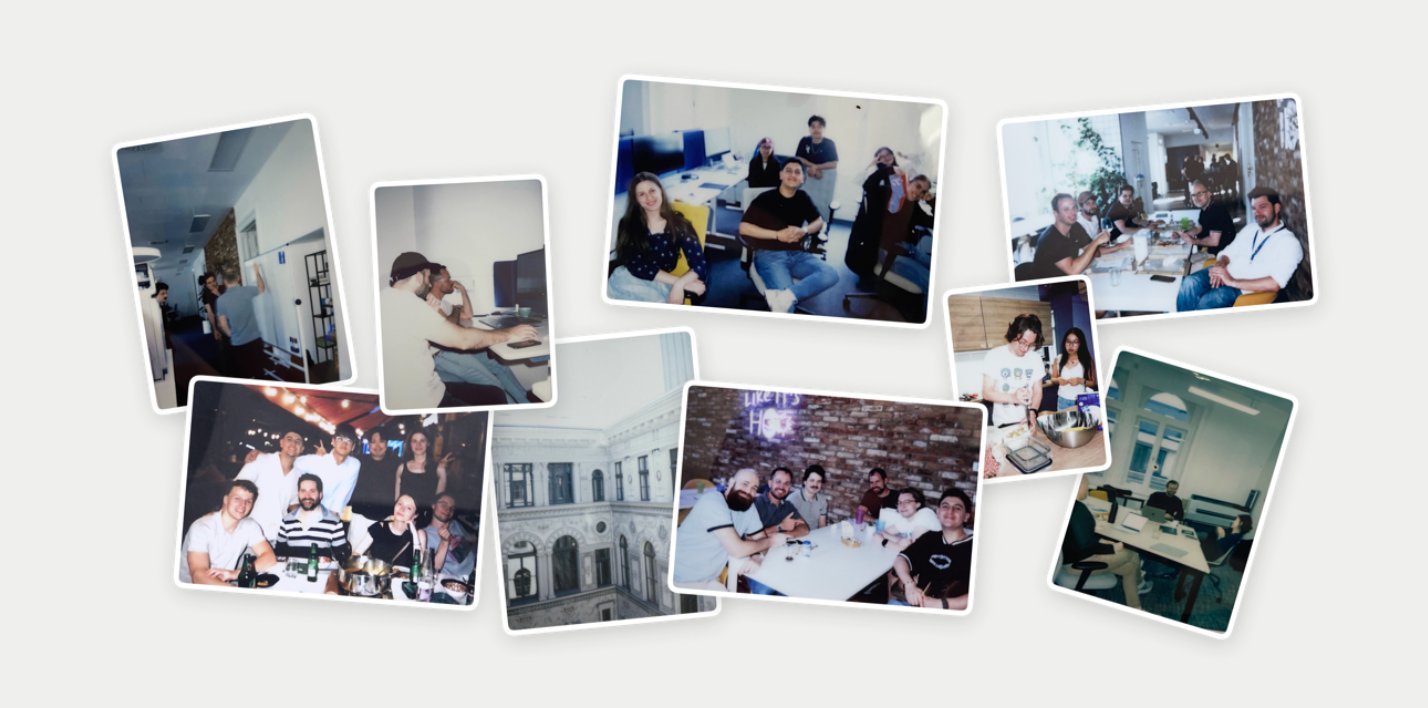
Last year, we shared how we hire at Craft. A lot has changed since then: not just in the industry, but inside Craft too.
In early January, we made a company-wide shift. Every team member, engineering and non-engineering alike, started working with AI tools (Claude Code, either directly or with Craft Agents) as a core part of their workflow.
Not as an experiment. As the new default.
The Pragmatic Engineer covered our AI-first shift in detail and here's what it means for how we hire.
As the team changed, so did our interview process
The way we work has fundamentally changed. The question we kept coming back to: if everyone on the team is now working with AI, what does that mean for who we hire next?
The answer became clear: it's not about what you can do alone - it's about how you work with AI as a collaborator.
We're no longer asking "Did you use AI?" We're asking: what did you build, how did you validate it, and did you ship it with judgment?
We've been deliberate about how we adopt AI internally. Now we're being just as deliberate about who joins us in this new way of working.
We're looking for people who've had their own "wow!" moment with AI and are curious to push further. If you're already using or actively exploring how these tools can multiply your impact, you'll feel at home here.
The new process
1. Application: Show us what you've built with AI
This is now a must. We ask every candidate to share personal projects they've created with AI assistance or built entirely through AI collaboration.
Why? Because this is the reality of how work happens now at Craft in all roles, not just engineering. Our customer support team automated triage. Marketing ships websites without engineering, and our People team is building our own HR system. This isn't a developer thing anymore; everyone is doing the most ambitious work with Craft Agents.
We want to see:
- What did you choose to build?
- How did you approach the collaboration?
- What's your relationship with these tools?
No polished portfolios needed. Side projects, experiments, or your death star dream project: all welcome.
Come as you are. (Still our favorite filter.)
2. Screening interview (45-60 min)
A conversation about who you are and what drives you.
We'll dig into your motivation, your background, and the AI projects you shared:
- What sparked the idea?
- What worked? What didn't?
- What did you learn along the way?
We're not looking for perfect answers. We're looking for curiosity and initiative: the same traits that matter more now than ever.
3. Technical discussion (60-90 min)
We'll work through a real problem together with AI tools available, just like actual work. We're watching for:
- Your collaboration style with AI (what you accept, what you question, how you validate)
- When you recognize the AI is wrong (it will be)
- How you break problems into clear, agent-friendly chunks
- Where your intuition kicks in despite operating at higher abstraction
We've seen on our own team that people develop a sense that flows through your work, even when operating at a higher level of abstraction. We're looking for signs of that developing intuition.
4. Culture interview (60-75 min)
The final step. We talk about how you work, what motivates you, understand how you like to work, what you value, and we'll also dig deeper into your past. Many times, there's no single right answer.
We still don't over-coach candidates on how to pass this part. You show up with your natural instincts. That's always been one of our best "fit" predictors, maybe even more so now.
5. Offer
Some things never change: You'll meet with your Talent Partner (hey, it's me again!) to discuss the details of your offer, and also take some time to walk you through our equity package, and any questions that might pop into your head
At this point, the decision is in your hands, but just know that we're already super excited to have you on board. We're doing our best to play it cool until we (hopefully 🤞) hear a big yes from you!
To junior applicants
We'll provide you AI credits, to have access to premium AI tools to build something real. We want to see your judgment and learning velocity, not your budget.
In the application stage you can share about personal projects or what you'd love to build, and past the intro call you'll get the chance to either elevate them or build them up for real.
One thing we've realized: someone with high learning ability and strong judgment can now do things that used to require years of experience. We've seen it internally: someone with the right mindset can use AI as an expert advisor to learn skills they never had before. If you can learn anything with a trusted guide beside you, you can do it.
That's what we're looking for.
Closing thoughts
We've been following AI's progress for years, and we believe we're in the middle of a generational shift in how work gets done. We want to be at the cutting edge of that change.
The truth is, nobody knows exactly what work looks like a year from now - that's simply the nature of being in this space right now. But we know it will be shaped by people who are willing to experiment, to push boundaries, and to figure out what's possible. That's the team we're building. Not people who have all the answers, but people who are excited to find them.
If that sounds like you, check out our open positions here, and see you on the first call. 🙋♀️
- Zita